
The Box That Sat for One Day Too Long
It's Monday morning, and a dispatcher has twelve container moves to place. One of them came off a vessel last Tuesday. Its free time ends tomorrow evening, which nobody has written down anywhere the dispatcher will look. The driver who usually works that lane is busy, so the move slides to the afternoon, then to Tuesday, then to Wednesday.
On Wednesday morning a daily charge starts running on that container. Nobody sees it. The invoice arrives weeks later, as one line among many, and by then no one remembers which move it belonged to.
Where Intermodal Planning Quietly Leaks
Three costs show up again and again in container moves. None of them is a surprise. They are just invisible at the moment the plan is made.
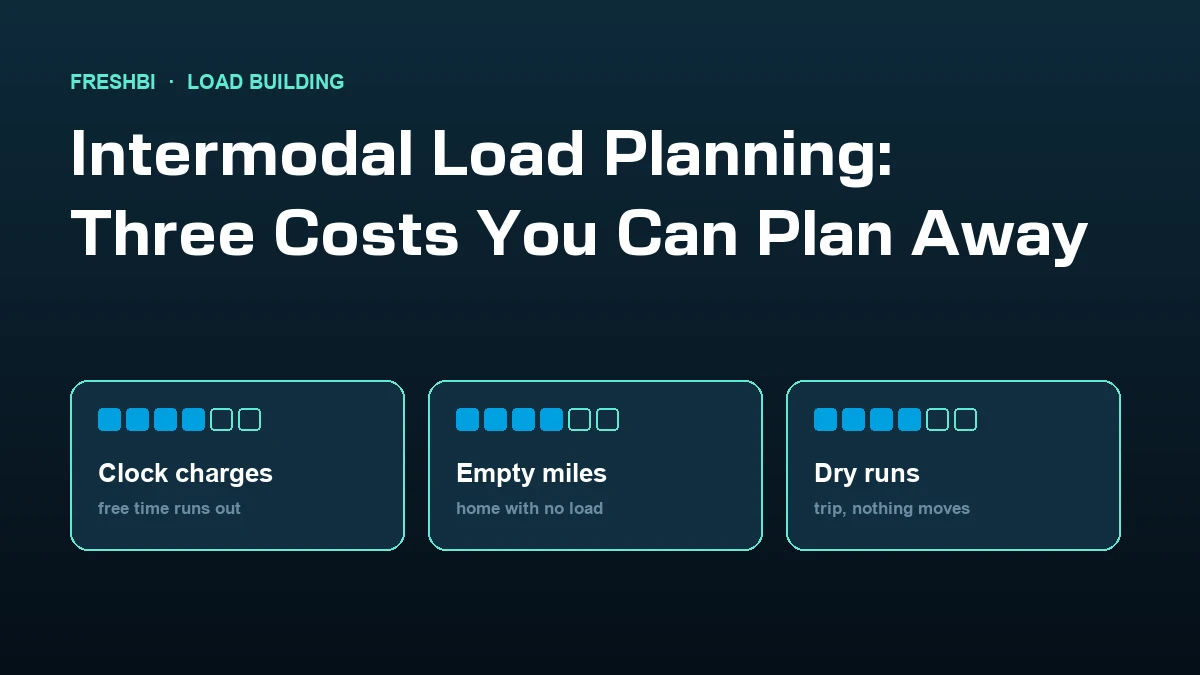
- Clock charges. Every container comes with free time. When it runs out, charges start: demurrage if the box is still inside the terminal, detention or per diem if it is out and not yet returned. The exact terms differ by port, shipping line and contract, but the shape is the same: a daily meter nobody was watching.
- Empty miles. A driver delivers a container and heads home with nothing. The fuel, the hours and the truck's wear are all spent on a trip that earns nothing.
- Dry runs. The driver arrives and the container isn't ready, the chassis is wrong, or the appointment was missed. The trip happened and nothing moved.
These leak for a structural reason. The free-time clock sits in a shipping line or terminal portal. The driver's hours sit in the dispatch system. Gate appointments sit in a third place. The person making the plan carries all three in their head and decides in the order the work arrived.
What Planning Changes
The change is to treat each container move as one object with three facts attached: a deadline (when free time ends), a window (the gate appointment), and a place in a driver's day. Once those are visible together, the order of work stops being first-come, first-served and becomes deadline-first.
What This Actually Looks Like
- Moves are sorted by the day free time ends, not by when they arrived. The box that came off the vessel last Tuesday rises to the top on Monday morning.
- Each move is fitted into a driver's day against its appointment window and hours, so a move that can't make its window is flagged early instead of discovered at the gate.
- Where the shipping line allows it, an empty import container can be reused for an export load without going back to the port. This is often called a street turn, and it removes a whole trip.
- A delivery is paired with a return load, so the driver heads home with freight, not empty. That is the problem our intermodal backhaul page is built around.
- A person approves the plan, and any move that can't be placed is flagged for a decision.
The Trade-Off Is Real
Pulling a move forward to beat a free-time deadline can use up a driver's hours or collide with another appointment. A street turn needs the line's agreement and the right container in the right place at the right time. Planning does not make those constraints vanish. It makes them visible next to the clock, so the choice is made on purpose and the cost is known before the invoice arrives.
Why It Matters Beyond the Invoice
Clock charges are slow feedback. They land weeks after the decision that caused them, so a team can repeat the same mistake for a month before anyone connects it to a cause. A plan that shows the deadline at the moment of the decision shortens that loop to zero. A free-time clock is not a bad day. It is a deadline, and it can be planned around.
Next in the Series
This is the third post in our load building series. It follows how many stops is too many and the warehouse post. You can see how the planning workflow works on a notional day on our multi-stop load building page. Logistics teams can see the wider picture on our AI and BI for logistics page.
If you learn what a container cost you when the invoice arrives, that's not a billing problem. That's a plan with no clock on it.