
Load Building
Healthcare Compliance Reporting: Built From the Intake, Not Rebuilt at Audit Time
The Two Weeks Spent Reconstructing a Project
A privacy officer at a regional health system sends a short request ahead of the quarterly review: for the analytics project that started in the spring, list what patient data was used, why, who had access, and under which agreement. They want it by Friday.
The project lead opens an empty document and starts digging. The purpose is somewhere in an email thread. The agreement is a PDF in a shared folder, or possibly two. Access was granted by three different people over four months. The fields that were actually used are visible only by reading the code. It takes two weeks to produce a report that describes, as best anyone can tell, what happened.
Every fact in that report was stated clearly at the start of the project. The customer said it in the first conversation.
Why Compliance Reporting Is Always a Reconstruction
Most compliance reports are written after the fact because the record they need was never kept as a record. It was kept as a conversation, an email, a ticket and a hunch.
- The facts are created for other reasons. The purpose is in a proposal, the access in an admin console, the agreement in a contract folder. None of them were written to answer a compliance question.
- Nobody owns the thread. The person who heard the purpose, the person who granted access and the person writing the report are rarely the same.
- Gaps are discovered at the worst time. If access was granted without a recorded reason, you learn that when someone asks, not when it happens.
What Changes When It's One Agent, Not a Handoff
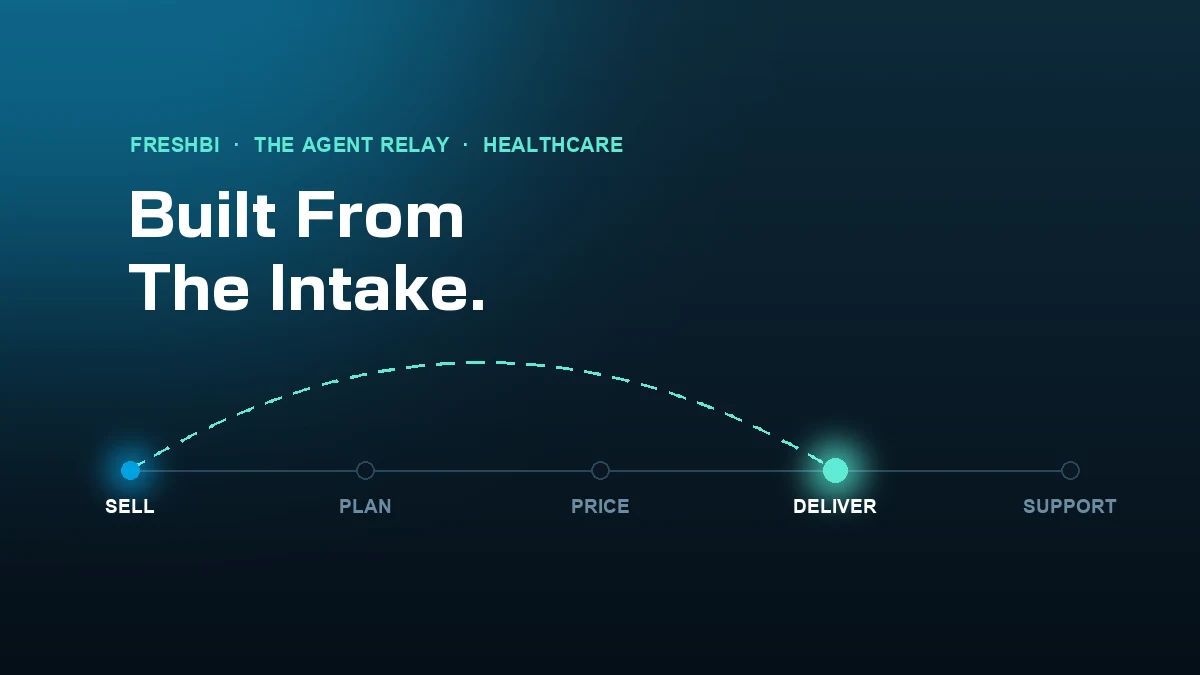
In an Agent Relay, the agent that heard the privacy officer's conditions in the first conversation is the one that carries the work forward. It's the same agent that applied those rules to how patient data is handled. So it doesn't have to reconstruct what the customer said, because it has been writing it down in structured form since the first call: the stated purpose, the fields requested, who approved what, and which agreement covers the work.
The report stops being a project. It becomes a view over a record that has been accurate all along.
What This Actually Looks Like
- The purpose is recorded when it's stated, in the customer's own words. "Reduce no-shows in the outpatient clinics" is a purpose. It's attached to the project from day one.
- Every request for data is tied to that purpose. A request for fields the purpose doesn't need is flagged while the work is happening, not found later.
- Approvals and agreements are attached, not remembered. Who signed off, on what date, and which agreement applies are part of the record, so the answer to "under which agreement?" is a lookup.
- The report is generated on request. The same record answers the quarterly review, an audit request or a customer's vendor questionnaire, with no new research.
- Gaps surface while the project runs. Access with no recorded reason, or a step with no recorded approval, shows up the day it happens, when it's still easy to fix.
Why This Matters Beyond Speed
Saving two weeks is the visible win. The bigger one is that the report becomes trustworthy. A report reconstructed from memory is an honest best guess. A report derived from a record kept at the time is evidence. In healthcare and pharma, a reviewer or auditor can tell the difference, and so can the customer's own compliance team.
That's why FreshBI is building its HIPAA compliance program around the same idea, led by a HIPAA-certified Privacy and Security Officer: the commitments only hold if the record of them is kept as the work happens.
Next In The Relay
This is the tenth post in the Agent Relay series, one continuous AI carrying context across the whole customer journey instead of resetting at every handoff. It builds on the patient data post. To see how we approach this industry, read our AI and BI for healthcare and pharma page. Next: what happens after delivery, when the next opportunity with a customer isn't a cold call at all.
If your compliance report starts with an empty document, that's not a reporting problem. That's a relay with a broken leg.